
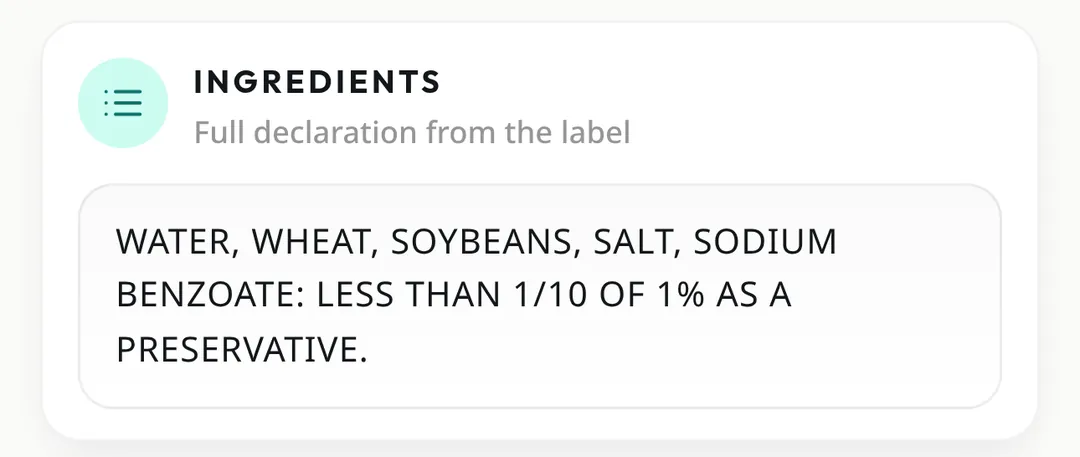
Pick up a bottle of soy sauce and turn it to the ingredient panel. A typical naturally brewed soy sauce reads: "Water, wheat, soybeans, salt, sodium benzoate: less than 1/10 of 1% as a preservative." That's the line on the fictional Shorewind bottle in our "New to reading labels for wheat?" ad. Wheat is the second ingredient, in a product most people file under "soy."
If a clinician has just asked you (or someone you shop for) to avoid wheat, that's the problem in one bottle. Wheat is rarely hidden in the legal sense, but it shows up in staples you've bought on autopilot for years. This guide covers where the word has to appear, the names that also mean wheat, and a plan for your first week. Your clinician sets the list; this is about reading labels for it.
Where wheat has to appear on a U.S. label
Wheat is one of the nine major food allergens under U.S. law, along with milk, eggs, fish, crustacean shellfish, tree nuts, peanuts, soybeans, and sesame. On packaged foods the FDA regulates, the label must name wheat in one of two places: in the ingredient list, as in "flour (wheat)," or in a "Contains" statement right after it, as in "Contains wheat, milk, and soy" (FDA).
Two details matter on your first shop:
- A missing "Contains" line doesn't mean no wheat. The statement is optional when the ingredient list already names wheat. If a maker does use one, it has to list every major allergen in the food (FDA guidance, Edition 5, Q&A D.1). Read both places.
- Spices and flavorings aren't a loophole. A spice, flavoring, or incidental additive that contains wheat must still be declared. FDA's own example is a bag of chips where wheat flour is an anticaking agent in the seasoning, and the only mention of wheat is "Contains: wheat" (FDA guidance, Edition 5).
Names that mean wheat
For labeling, "wheat" means any species in the genus Triticum. FDA lists common wheat, durum, club wheat, spelt, semolina, einkorn, emmer, Khorasan, and triticale (FDA guidance, Edition 5, Q&A C.9). Some are sold as "ancient grains," so they're easy to miss.
| Label name | What it is |
|---|---|
| Flour, white flour, enriched flour | On a U.S. label, plain "flour" is wheat flour by definition (21 CFR 137.105) |
| Durum, semolina | Both are durum wheat, Triticum durum (FDA guidance) |
| Spelt, farro, einkorn, emmer, Kamut®, Khorasan | Wheat species and varieties (FARE; Food Allergy Canada) |
| Bulgur, couscous, freekeh, farina | Wheat-based grain products (FARE) |
| Triticale | A cross between wheat and rye (Food Allergy Canada) |
| Seitan, matzo, bread crumbs, cracker meal, hydrolyzed wheat protein | Made from wheat (FARE) |
FARE also flags names that are sometimes wheat: glucose syrup and starches such as modified food starch (FARE). On an FDA-regulated package, the law still requires wheat used in any ingredient to be named (FDA). The "sometimes" list matters most where those rules don't reach (below) and on imports.
Where wheat turns up unexpectedly
FARE and Food Allergy Canada both list soy sauce as a possible source, along with sauces, soups, broths, bouillon cubes, gravy mixes, seasonings, salad dressings, surimi (imitation crab), processed meats, candy, and ice cream (FARE; Food Allergy Canada). Food Allergy Canada names tamari among the sauces to check, so don't assume any soy-based sauce is wheat-free without reading it.
Three label examples of the kind you'll meet:
- Soy sauce: "Water, wheat, soybeans, salt…" Wheat is right there, but only if you turn the bottle around.
- A seasoned snack or seasoning blend: "Potatoes, vegetable oil, salt, spices… Contains: wheat." The ingredient list never says wheat. The "Contains" line carries it, as in FDA's chips example.
- A bouillon cube or gravy mix: wheat flour can appear mid-list as a thickener. Cheap pantry items are easy to skip, so read them anyway.
Labels that play by different rules
FDA's allergen labeling law doesn't cover everything in the store. It excludes meat, poultry, and egg products (regulated by USDA), alcoholic beverages under TTB rules, and most foods sold unpackaged at a counter (FDA). USDA requires every ingredient on meat and poultry labels to be declared, and its inspectors check that the nine major allergens, wheat included, are labeled (FSIS Directive 7230.1). But the FDA format above isn't required there, so don't count on a "Contains" line.
So read sausages, deli meats, and seasoned poultry slowly, ask at the bakery or deli counter, and note that beer is on both FARE's and Food Allergy Canada's source lists.
Your first-week pantry sweep
Start at home, where it's calm.
- Check sauces and condiments first: soy sauce, teriyaki, marinades, salad dressings.
- Then soups, broths, bouillon, and gravy mixes.
- Then seasonings and snack foods, reading the "Contains" line as well as the list.
- Set aside anything unclear and contact the manufacturer listed on the pack. Note the answer so you only ask once.
Food Allergy Canada recommends a "Triple Check": read the label at the store, again when you put it away, and again before serving (Food Allergy Canada). Recipes change, so a product that passed last month gets read again this month.
Checking labels for wheat with Food Metric
Here's the same check in Food Metric, our iPhone grocery scanner.
1. Add Wheat to a profile, once. It's under "Major Allergens (FDA Big 9)" on the Profile & Preferences screen.
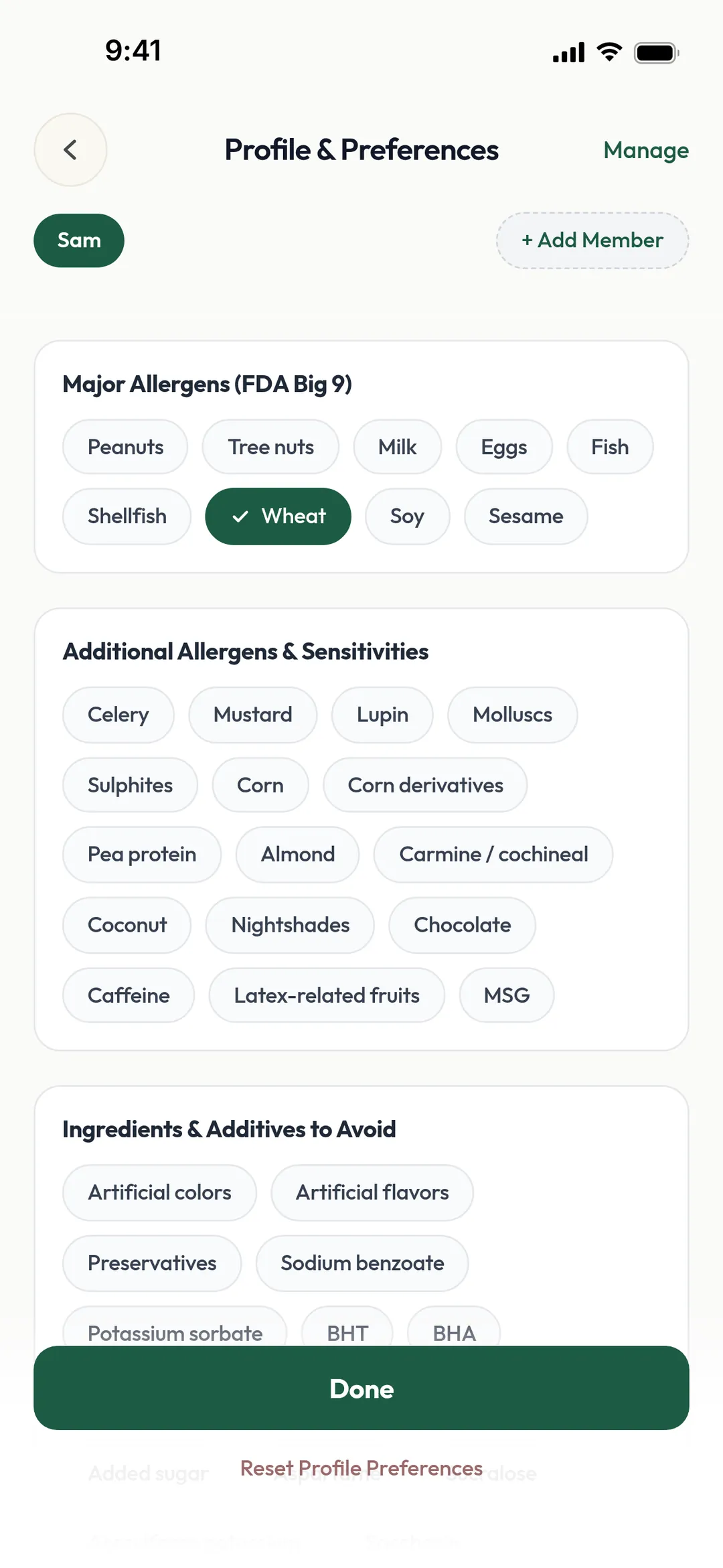
From then on, every scan checks for "wheat" and wheat grain names such as durum, semolina, spelt, farro, bulgur, couscous, and triticale.
2. Scan the barcode.
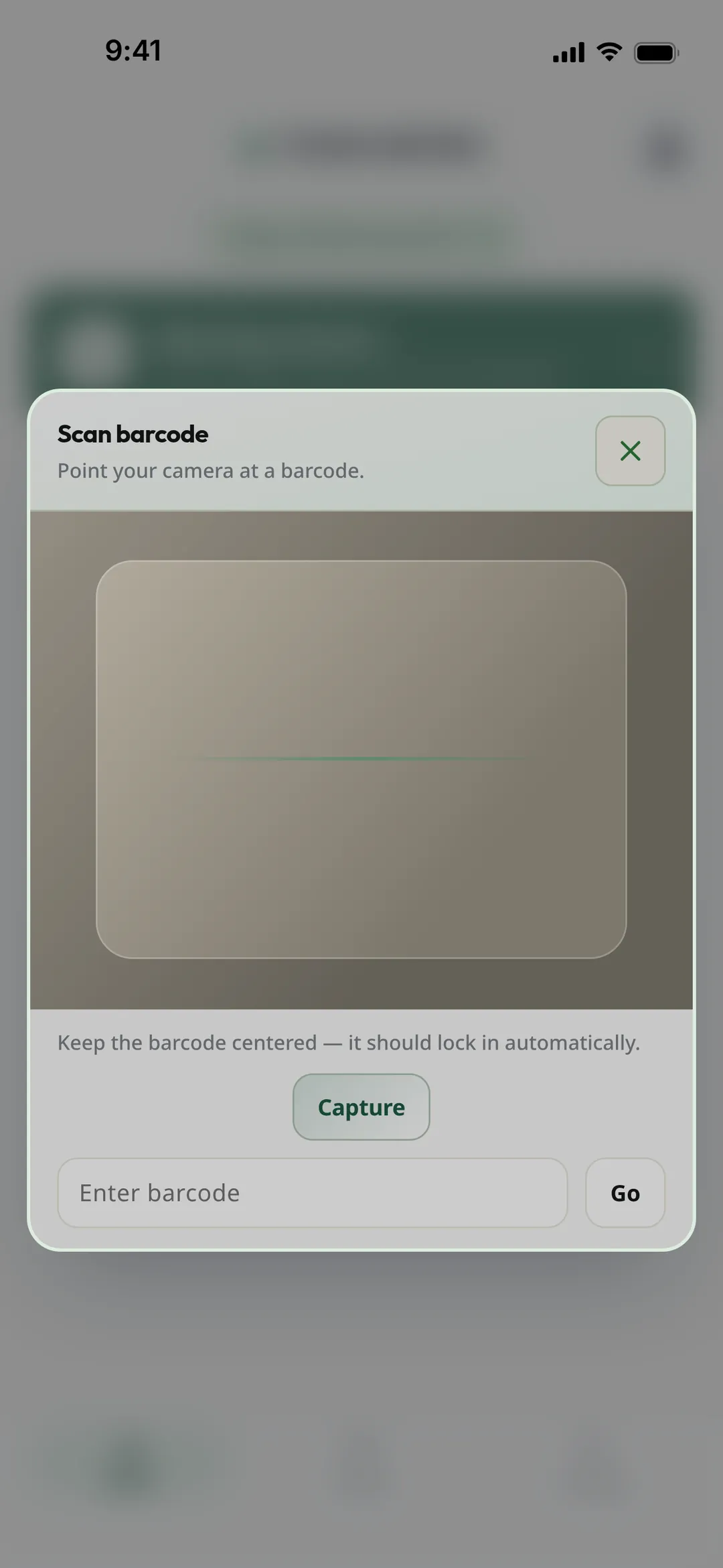
The barcode locks in on its own. If it's worn, type the number in.
3. Read the verdict. On a standard soy sauce, the app flags the conflict and names the reason.
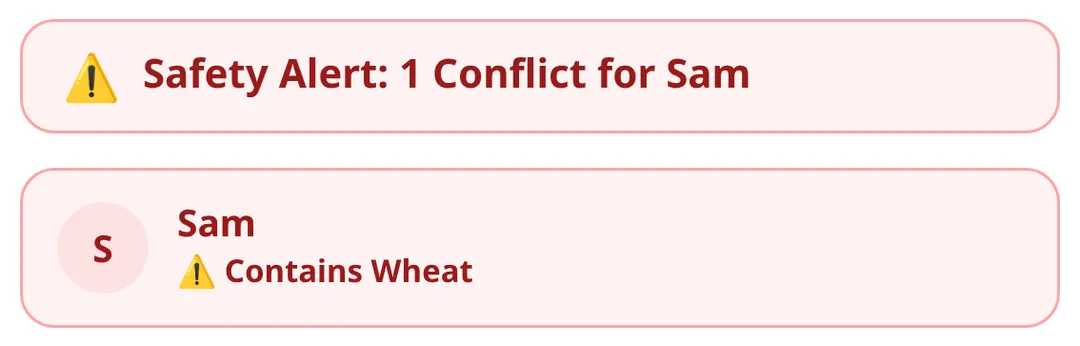
4. Confirm it in the ingredient list. Scroll to Ingredients to see the full declaration and find the word yourself.
The same scan checks every profile you've set up (up to 8 people), each with its own allergens and ingredients to avoid. You also get additive checks, a 1–10 Food Metric score with the reasons behind it, and a catalog of 900,000+ products you can search before you leave the house.
When a scanner helps (and when it doesn't)
It helps with the repetitive part: checking every soy sauce, broth, and seasoning against the list you've entered, without holding a dozen grain names in your head. That matters most in the first weeks, before habits catch up.
It doesn't replace reading the pack. Food Metric works from product data, which can be incomplete or out of date, and recipes change. It checks the wheat names above, so an ingredient like "modified food starch" or "natural flavor" won't be flagged unless the product data names wheat. It's built around wheat, so if your clinician's list includes other grains, such as barley or rye, read for those yourself. It can't help with unpackaged food at a counter. If the app and the package disagree, trust the package.
Your first grocery trip, step by step
- Bring the list of products you already checked at home.
- Scan new items, then read the ingredient list and "Contains" line yourself.
- Slow down at meat, deli, bakery, and beer. When in doubt, put it back.
Shopping for several people with different lists? Our guide to grocery shopping when your family has different allergies covers the full system. Hosting this month? See our label-check guide for Thanksgiving hosts.
Try it on your next shop
Add Wheat to a profile, then scan the sauces and seasonings you'd never think to check. Food Metric gives you 7 days of full access free, then 3 free scans every month. Premium is $3.99/mo or $39.99/yr.
Get Food Metric on the App Store
FAQ
Does soy sauce have wheat?
It can. A typical naturally brewed soy sauce lists wheat as its second ingredient. FARE and Food Allergy Canada both list soy sauce as a possible wheat source, and Food Allergy Canada adds tamari (FARE; Food Allergy Canada). Read each bottle.
Is spelt wheat?
Yes. Spelt is a wheat species (Triticum spelta), and so are einkorn, emmer, and Khorasan (FDA guidance, Edition 5).
Is buckwheat wheat?
No. Despite the name, FARE notes buckwheat isn't related to wheat (FARE). Ask your clinician whether it belongs on your list, and read the label of any buckwheat product like any other.
Do U.S. labels have to say "wheat"?
On FDA-regulated packaged foods, yes: in the ingredient list or a "Contains" statement (FDA). Meat, poultry, and egg products, alcoholic drinks, and most unpackaged counter foods fall outside that law.
Should I stop eating wheat before seeing a clinician?
The NHS advises not cutting foods out of your diet without speaking to a GP first (NHS). The list is your clinician's call.
Not medical advice. This article is for general educational purposes about label reading and food ingredients. It is not a diagnosis, treatment plan, or substitute for advice from a qualified healthcare professional. Food Metric is informational guidance based on product data, which can be incomplete or out of date. Always verify the label on the package and follow your clinician's guidance for your household.